


The Insights That Power IT Decisions at St Louis CC
March 11, 2026 | Case Studies
5 mins min
Snapshot
Client: St Louis Community College
Location: St. Louis, Missouri
Total students: 17,236
Total IT staff: 95
LabStats customer since: 2020
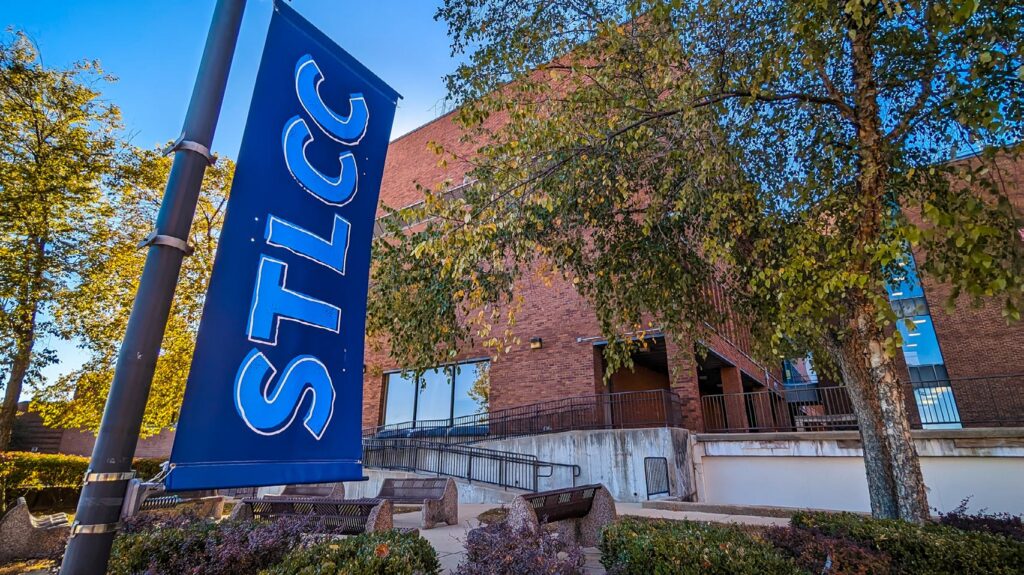
St Louis Community College manages a complex IT environment: over 17,000 students, over 5,000 classroom computers, 70 IT staff, distributed across 10 sites in 4 major campuses and 7 new buildings.
As a community college, St Louis students combine study with work, family and other commitments, which means the college must stay open 24/7 to allow students opportunities to study when it suits them.
Behind that flexibility there is an underlying expectation of technology that is available and works.
The challenge: too much data, not enough clarity
When Kris Daert stepped into the role of Technology Asset Manager, she inherited responsibility for one of the college’s most expensive and visible investments: its computers.
What didn’t come with the role was a single, reliable view of the whole hardware estate.
To understand inventory, usage and refresh status, the team had to jump between SCCM, Active Directory, Spider and other systems. One report would use a service tag, another a hostname. Naming conventions didn’t always align. Pulling a clean list meant cross-referencing spreadsheets and hoping nothing was missed.
Refresh cycles were largely age-based – five years and out – regardless of how heavily (or lightly) a machine had been used. Some labs were stretched to capacity. Others were half empty. Some computers were in boxes, waiting to be used. But without clear usage evidence, decisions were often shaped by habit, or by the loudest voice in the room.
As Kris puts it, conversations about removing or reallocating equipment could quickly become emotional. Departments feared losing resources. IT lacked a neutral, empirical way to anchor the discussion.
In an environment where budgets are tightening and hardware costs are predicted to rise significantly, guesswork could no longer balance the need for responsible spending with ensuring tech availability across campus.
Creating a single source of truth
LabStats changed that dynamic. Originally implemented to help students find available computers on campus and login remotely during COVID, it quickly became something more strategic: a single source of truth for device and software usage across all campuses.
Now, instead of stitching together reports, Kris and her colleagues can see:
- Maximum concurrent usage in each lab
- Which machines are consistently ignored
- When buildings are actually busy
- Whether expensive software is being used to its license capacity
The impact shows up in practical, everyday decisions.
Using concurrent usage data, the team can right-size labs, moving devices from rooms running at 40–60% utilization into spaces that are consistently full. A custom “shopper” report built in PowerBI helps Kris identify specific machines students avoid, whether due to desk layout or location, allowing faculty to spend their resources on technology students actually use.
Peak usage timing informs operational decisions too. Campus police and lab coordinators can work more efficiently and align staffing and patrols with real student behavior, not assumptions.
And automated alerts delivered to team’s inboxes flag machines that haven’t been used in 30 days, are running low on storage, or have been accidentally unplugged.
What used to take weeks of manual reconciliation is now visible in minutes, and it prompts the team to be proactive about resolving these issues.
Turning data into confident decisions
Kris has taken LabStats data further by building tailored PowerBI dashboards for leadership.
She tracks traffic patterns across campuses – for example, knowing Meramec sees its heaviest usage in September helps the team schedule major projects in quieter months like July. Trends are visual, clear and easy to interpret.
Those “pretty pictures,” as she describes them, tell accurate and meaningful stories that remove emotion from budget conversations and lead to better decisions. When faculty or administrators question reductions or reallocations, the discussion shifts from opinion to evidence. Usage trends speak for themselves.
That clarity has changed how Kris feels in her role. She reports directly to the COO, and she does so with confidence, not because she has more data, but because she knows exactly where it comes from and how it was measured.
There’s no scrambling to validate numbers pulled from three different systems. There’s one source, one methodology, one story.
Responsible spending in uncertain times
With hardware costs forecast to rise significantly and budgets under pressure, St Louis Community College has moved from reactive replacement to strategic investment.
Instead of refreshing every five-year-old machine by default, the team prioritizes the oldest devices with the highest usage. Specialty labs, such as 3D modelling spaces, are protected and properly equipped because the data proves their demand. General labs are configured based on how students actually use them, whether that means dual monitors or quieter study zones.
Surplus machines in one building can be redeployed to another. Underused spaces can be consolidated. Licenses can be reduced if usage drops off mid-semester. Every decision is grounded in real behavior.
A stronger position for IT
For Kris and her team, LabStats isn’t just a reporting tool. It’s a foundation for credibility.
It allows IT to demonstrate equity across campuses, defend budget requests with evidence, and ensure students have access to the technology they rely on, whether they’re studying at midday or midnight.
In a complex, always-on community college environment, that visibility makes a huge difference, as this allows budgets to stretch further for students’ benefit.
Work With Us
LabStats specializes in helping IT leaders reduce spend and get their budgets right.
